



Find your product now in our new webshop!
You can now access detailed product information and data sheets in our new eStore.
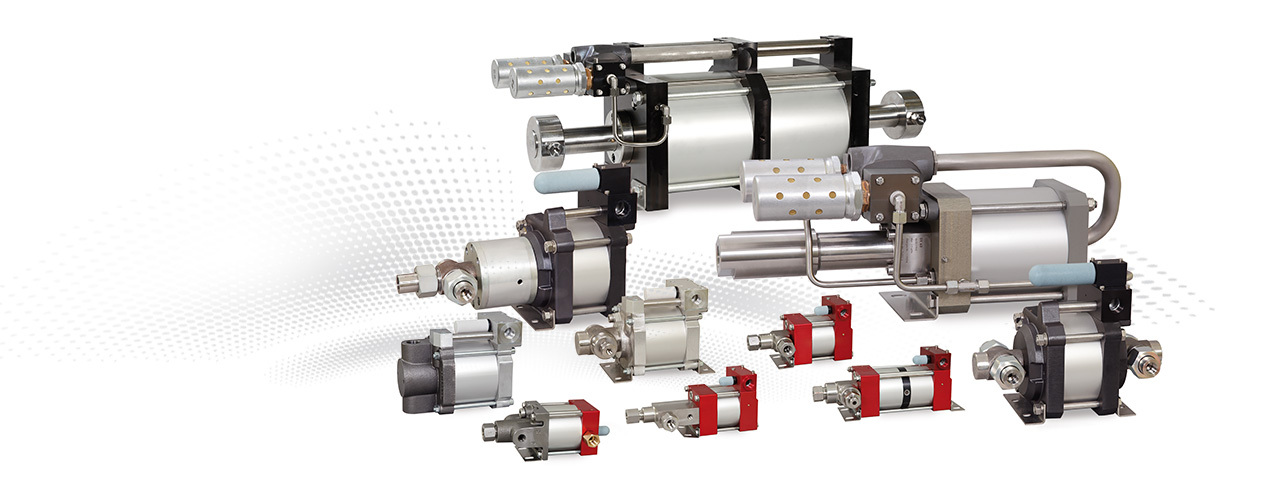
Maximator Air Driven Liquid Pumps
Maximator® air driven liquid pumps are positive displacement, reciprocating pumps designed to provide reliable liquid flow and pressure using compressed air as the power source. Our pump range includes configurations for lower pressure and high pressure applications, with models available for water, oil, and chemical service.
With a wide range of pump ratios, materials, configurations, flow capabilities, and pressure ratings, Maximator liquid pumps can be selected to meet the specific requirements of pressure testing, hydraulic power, chemical injection, and other industrial applications.
How Air Driven Liquid Pumps Work
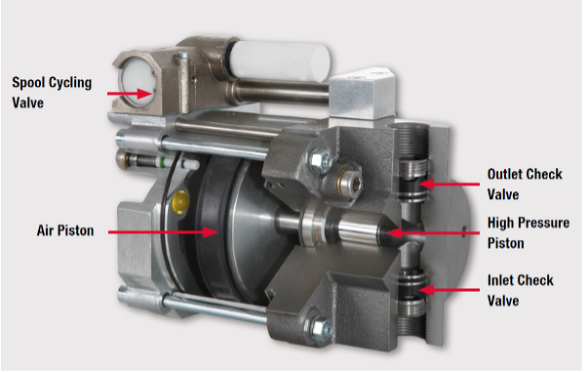
Maximator air driven liquid pumps operate on the principle of an oscillating pressure intensifier. Compressed air drives the air piston, which is mechanically connected to the high pressure piston. As the piston assembly reciprocates, the pump draws liquid through the inlet check valve and discharges it through the outlet check valve, building pressure with each cycle.
The pump's pressure ratio is determined by the surface ratio between the air drive piston and the high pressure piston. This ratio, together with the available air drive pressure, determines the operating pressure the pump can achieve. Maximator pumps are available in different pressure ratios, air drive configurations, and single or double acting designs to provide different combinations of operating pressure, flow capacity, and pulsation characteristics.
Liquid Pump Types and Applications
Maximator offers air driven liquid pumps in a range of configurations to meet different pressure, flow, medium, and application requirements. Pump series are available for oil, water, and special fluids, with single acting and double acting configurations and different air drive arrangements available depending on the series. Selecting the appropriate pump depends on the required operating pressure, flow capacity, available air drive pressure, pumped medium, and operating conditions.
-
PPO Series
Pressures from 60 to 14,500 PSI
PPO pumps are lightweight and rugged, making them well suited for portable power pack applications. The PPO Series is available in eight pressure ratios and uses a single acting, single air drive head configuration.
-
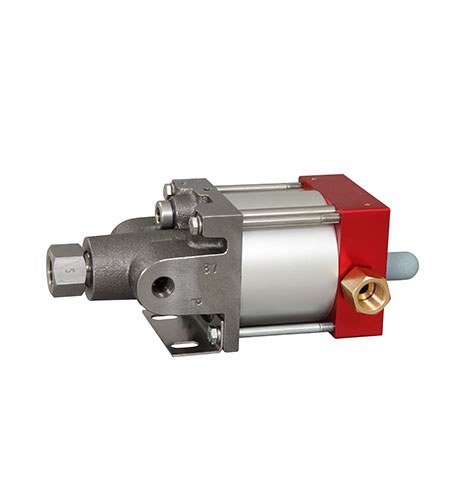
S Series
Pressures from 105 to 14,500 PSI
S Series pumps are compact and lightweight for simple installation in both static and portable applications. Available in six pressure ratios, they are well suited for applications requiring fast response and reliable oil service.
-
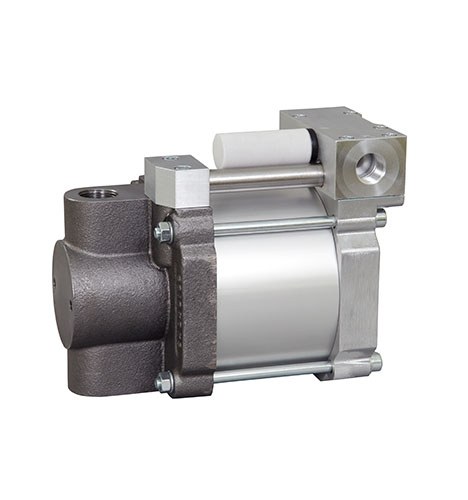
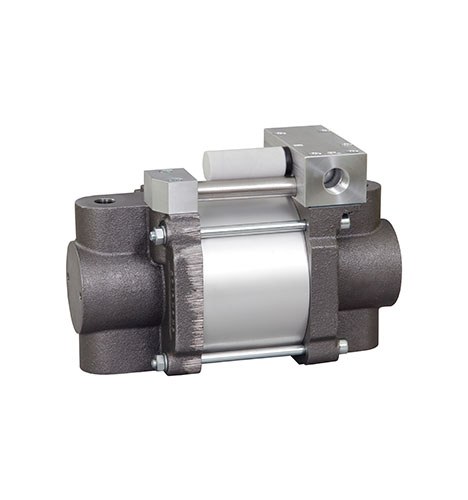
S-D series
Pressures from 105 to 14,500 PSI
S-D Series pumps provide the double acting configuration of the S Series for applications requiring higher flow. Their compact design and range of pressure ratios make them suitable for both static and portable installations.
-
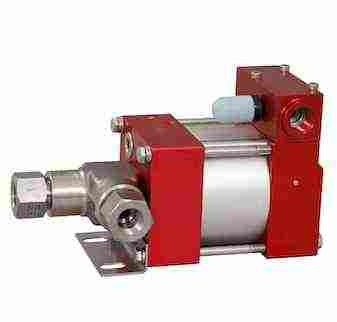
PP series
Pressures from 60 to 60,000 PSI
PP Series pumps are compact, lightweight, and rugged, with configurations available for a wide range of pressure and flow requirements. The series includes single acting configurations with single, double, or triple air drive heads, as well as double acting configurations with a single air drive head.
-
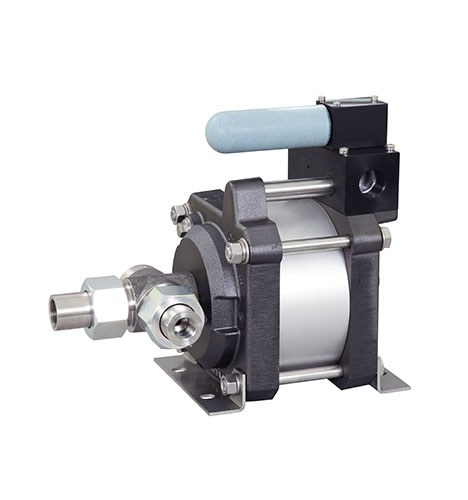
L Series
Pressures from 165 to 101,000 PSI
L Series pumps are designed for high-pressure water or oil service and are available in single acting configurations with either a single or double air drive head, as well as double acting configurations with a single air drive head.
-
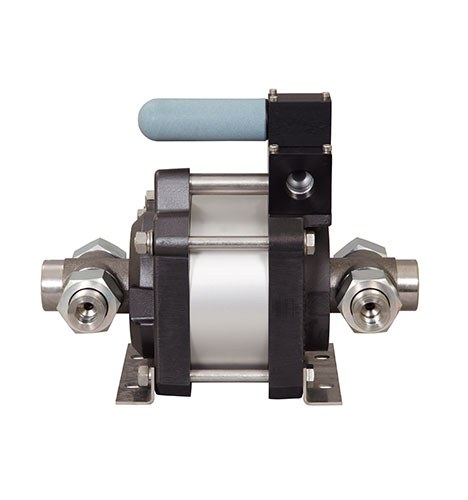
L-D Series
Pressures from 165 to 38,425 PSI
L-D Series pumps are the double acting version of the L Series, providing increased flow capacity for applications where higher liquid flow is required.
-
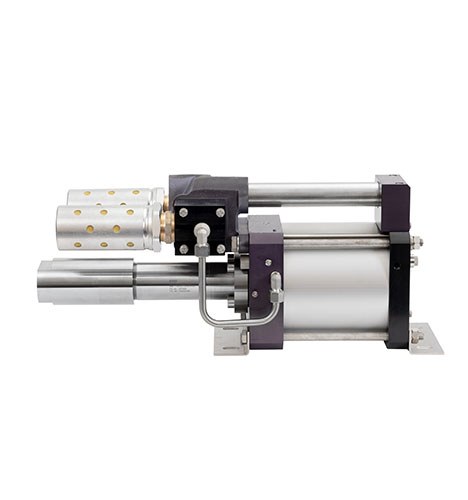
GX Series
Pressures from 540 to 22,500 PSI
GX Series pumps are high flow liquid pumps designed for rugged installations and demanding environments. Stainless steel wetted parts and corrosion resistant external components make the GX Series particularly well suited for offshore applications.
-
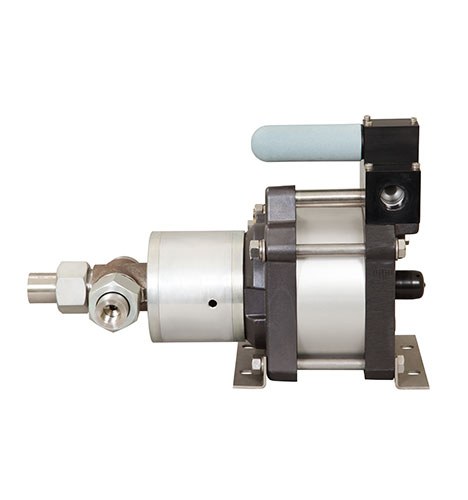
LSF Series
Pressures from 165 to 23,200 PSI
LSF Series pumps are designed for chemical service applications and are available in single acting configurations with either a single or double air drive head. A distance piece separates the liquid section from the air drive section, providing physical separation between these areas.
-
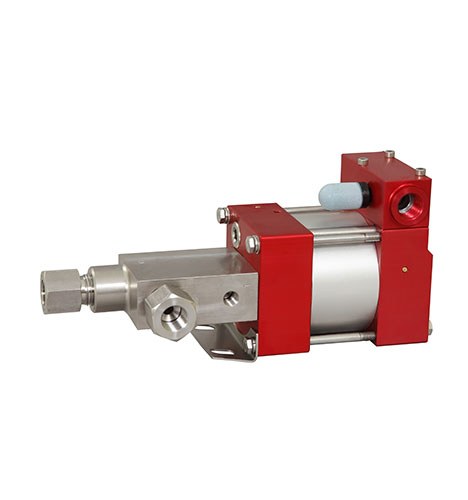
PPSF Series
Pressures from 60 to 14,500 PSI
PPSF Series pumps are designed for chemical service applications and feature a single acting, single air drive head configuration with a distance piece separating the liquid and air drive sections.
-
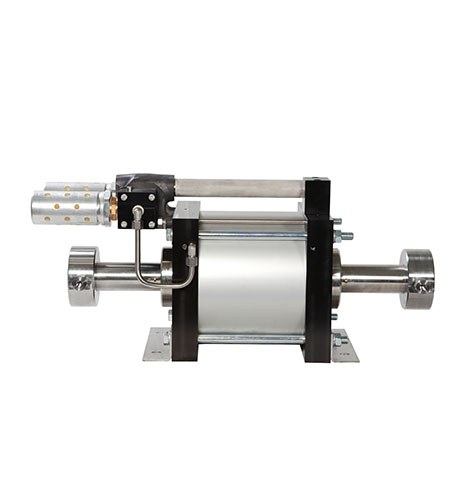
GPD Series
Pressures up to 40,000 psi
GPD pumps are double acting, high-flow liquid pumps designed for rapid filling and high discharge pressures. Available with single or double air drive heads, they are suitable for applications including pressure testing, hydraulic accumulator charging, wellhead and subsea valve operation, and high flow chemical injection. They are available for hydraulic oil, water, and chemical applications.
High Pressure Liquid Pump Applications
Maximator air driven liquid pumps provide a reliable source of controlled liquid pressure and flow for testing, hydraulic power, fluid injection, and other industrial applications.
Pressure Testing
Hydrostatic, proof, leak, and component testing of pipelines, hoses, valves, and other pressure containing equipment.
Hydraulic Power
Hydraulic power units, cylinder actuation, clamping, crimping, cutting, presses, bolt tensioning, and accumulator charging.
Chemical Injection
High pressure injection of chemicals and other specialized fluids.
Oil & Gas
Wellhead control, subsea valve operation, pipeline testing, and offshore hydraulic applications.
Industrial Applications
Pressure generation, testing, and hydraulic actuation across manufacturing and process industries.
Refrigerant Testing
Pressure testing and other applications involving refrigerants and liquefied gases.
Air Driven Liquid Pumps Frequently Asked Questions
An air driven liquid pump uses compressed air to generate high pressure in a liquid. Also referred to as a pneumatic liquid pump or pneumatically driven liquid pump, it uses an air driven piston to pressurize liquids such as water, oil, and other compatible fluids.
Air driven liquid pumps are commonly used when high hydraulic pressure is required for applications such as pressure testing, hydrostatic testing, clamping, injection, and hydraulic pressure generation. Because the pump is powered by compressed air rather than an electric motor, it can also be used in applications where electrical equipment is undesirable or where operation in hazardous environments is required.
Maximator air driven liquid pumps use an oscillating pressure intensifier design. The available pump ratios allow compressed air at a relatively low pressure to generate liquid pressures many times higher, with pump configurations available for different pressure, flow, and fluid requirements.
An air driven liquid pump uses compressed air to drive a piston that pressurizes a liquid. The pump converts the force of the air piston into a much higher hydraulic pressure through a pressure intensifier design.
The basic operating sequence is:
1. Compressed air drives the air piston. Compressed air enters the drive section of the pump and moves the air piston.
2. The liquid piston pressurizes the fluid. The air piston is connected to a smaller high pressure piston. As the piston moves, it draws liquid into the pump and then forces it toward the outlet.
3. Check valves control liquid flow. Inlet and outlet check valves control the movement of liquid through the pump, allowing fluid to enter during the suction stroke and exit under pressure during the pressure stroke.
4. The pump cycles automatically. A pneumatic control valve reverses the air piston at the end of each stroke, allowing the pump to continue building hydraulic pressure.
5. The pump stops when the target pressure is reached. Once the hydraulic pressure reaches equilibrium with the available air drive force, the pump automatically stops cycling. No energy is consumed while the pump is holding pressure. If the outlet pressure later drops, the pump automatically restarts to restore the desired pressure.
The pressure ratio between the air piston and high pressure liquid piston determines how much the available air pressure can be intensified. This allows an air driven liquid pump to generate hydraulic pressures far above the available compressed air pressure.
Because the pump stops once the required outlet pressure is reached, it can maintain pressure for extended periods without continuously consuming energy or generating heat during the pressure holding phase.
Air driven liquid pumps are used to generate, boost, and maintain high liquid pressure in industrial and engineering applications. They are particularly useful when high hydraulic pressure is required without using an electric motor.
Common applications include:
• Pressure testing of components, vessels, piping, valves, and hydraulic systems
• Hydrostatic testing and pressure verification
• Leak testing and pressure holding
• Proof and burst testing
• Pressure cycle testing
• Hydraulic pressure generation
• Clamping and tensioning
• Injection and metering applications
• Charging or pressurizing hydraulic systems
• Testing and calibration of pressure equipment
Air driven liquid pumps are used across industries including automotive, chemical processing, plastics, energy, oil and gas, general manufacturing and mechanical engineering.
They are especially useful for applications that require high pressure, controlled pressure generation, long pressure-holding periods, or operation where electric powered equipment may not be suitable. Because an air driven pump automatically stops when the required outlet pressure is reached and restarts if pressure drops, it can maintain system pressure without continuously consuming energy during the pressure holding phase.
Maximator offers air driven liquid pumps in multiple series, pressure ratios, flow capacities, and material configurations to accommodate different industrial applications.
Choosing an air driven liquid pump starts with identifying the required outlet pressure and flow rate, then selecting a pump that can meet those requirements with the available compressed air supply and the fluid being pumped.
The most important factors to consider are:
• Required outlet pressure: Determine the normal operating pressure as well as any required test or maximum pressure.
• Required flow rate: Identify how quickly the system needs to reach pressure and whether continuous flow is required.
• Available air pressure: The available compressed air pressure affects the pump's achievable outlet pressure and operating performance.
• Pump ratio: The pressure ratio determines how the available air pressure is intensified into hydraulic pressure.
• Fluid: Select materials and seals that are compatible with the liquid, including consideration of viscosity, temperature, and chemical compatibility.
• Inlet conditions: Consider the available inlet pressure, fluid supply, and required inlet connection.
• Pressure holding requirements: Applications requiring the pump to maintain pressure for extended periods can benefit from an air driven pump that automatically stops at the target pressure and restarts if pressure drops.
• Operating environment: Consider temperature, installation conditions, hazardous area requirements, and any required certifications.
• Duty cycle: Determine how frequently the pump will cycle and whether the application requires single acting or double acting operation.
The goal is to select a pump that provides the required pressure and flow without unnecessarily oversizing the system. Maximator offers multiple air driven liquid pump series, pressure ratios, and configurations to accommodate different pressure, flow, fluid, and operating requirements.
Providing the required pressure, flow, fluid, available air pressure, and operating conditions helps us recommend the appropriate pump for your application.
Contact Us
The pressure ratio of an air driven liquid pump determines how the available compressed-air pressure is converted into hydraulic pressure. The ratio is based on the effective area of the air drive piston compared with the high pressure liquid piston.
For example, a pump with a higher pressure ratio can generate a higher outlet pressure from the same air drive pressure. However, higher pressure ratios generally correspond to lower liquid flow rates because the high pressure piston has a smaller displacement.
This creates a tradeoff between pressure and flow when selecting a pump:
• Lower pressure ratio: Higher flow and lower maximum outlet pressure
• Higher pressure ratio: Higher outlet pressure and lower flow
• Intermediate pressure ratio: A balance between pressure and flow
The required outlet pressure, flow rate, and available compressed air pressure should therefore be considered together when selecting the appropriate pump ratio.
Maximator offers air driven liquid pumps with a wide range of pressure ratios, allowing the pump to be matched to the pressure and flow requirements of the application.
An air driven liquid pump can generate hydraulic pressures ranging from 60 psi to 79,750 psi, depending on the pump design, pressure ratio, available air pressure, and configuration.
The pump's pressure ratio determines how the available compressed air pressure is converted into liquid pressure. Higher pressure ratios produce higher maximum outlet pressures. The pump's nominal pressure ratio is reflected in its model number, while the technical specifications provide the exact ratio.
Maximator's current pump range includes:
• PPO Series: 60–14,500 psi
• S & S-D Series: 105–14,500 psi
• PP Series: 60–60,000 psi
• L Series: 165–79,750 psi
• L-D Series: 165–38,425 psi
• GX Series: 540–22,500 psi
• GPD Series: 450–43,500 psi
• PPSF Series: 60–14,500 psi
• LSF Series: 165–23,200 psi
The actual operating pressure should be selected based on the required outlet pressure, available minimum plant air pressure, required flow rate, fluid, and compatible materials.
One important characteristic of an air driven liquid pump is that it does not have to continuously consume energy to maintain pressure. When the pump reaches its stall pressure, it stops cycling, has no flow and no air consumption, and can hold the outlet pressure indefinitely. It only strokes again if the outlet pressure drops or the air drive pressure increases.
The flow rate of an air driven liquid pump depends on the pump model, pressure ratio, available air drive pressure, outlet pressure, and fluid properties. Unlike a fixed speed electric pump, an air driven pump's flow typically decreases as outlet pressure increases.
Air driven pumps run rapidly at low or no outlet pressure and progressively slow as pressure increases. At the pump's stall pressure, the pump stops, resulting in zero flow and zero air consumption.
Maximator publishes flow curves for each pump series at different air drive and outlet pressures. For example, the current catalog shows that the GX Series can produce flow rates ranging from hundreds to more than 1,500 cubic inches per minute at low outlet pressures, depending on the model and air drive pressure. Flow decreases as outlet pressure increases.
When selecting an air driven liquid pump, the required flow rate should always be considered together with the required outlet pressure. A pump that can generate the required maximum pressure may not provide sufficient flow at that pressure.
For this reason, Maximator pump selection is based on four primary factors: fluid and compatible materials, minimum available plant air pressure, required outlet pressure, and required flow rate.
Yes. Air driven liquid pumps are widely used for high pressure testing applications, including hydrostatic testing, leak testing, proof testing, burst testing, and pressure cycle testing.
Because an air driven pump can generate high hydraulic pressure from a relatively low pressure compressed air supply, it is well suited for testing components and systems that need to be verified at elevated pressures. The pump can also automatically stop when the required outlet pressure is reached and restart if pressure falls, making it useful for pressure holding and leak testing applications.
Common pressure testing applications include:
• Hydrostatic testing
• Proof testing
• Leak testing
• Burst testing
• Pressure cycle and fatigue testing
• Testing valves, piping, pressure vessels, and hydraulic components
• Calibration
Maximator offers air driven pumps as individual pumping units as well as complete test systems, including power packs, test carts, test benches, and packaged systems for water and oil service.
For a pressure testing application, pump selection should be based on the required test pressure, required flow rate, test medium, available compressed air pressure, and volume of the component being tested.
Yes. Air driven liquid pumps can be well suited for hazardous environments because they use compressed air rather than an electric motor as their primary power source. However, suitability for a specific hazardous location depends on the pump configuration, certification, installation, and the area's classification.
Maximator offers pump configurations designed for hazardous area applications. For example, the GX Series is available for applications requiring explosion protected equipment and is designed for use in Zone 1 environments.
When selecting an air driven pump for a hazardous area, consider:
• Hazardous area classification
• Required certification
• Ambient and fluid temperature
• Pump materials and seals
• Required pressure and flow
• Available compressed air pressure
The pump and the rest of the pressure system should be evaluated as a complete installation to ensure that the equipment is appropriate for the specific hazardous environment.
An air driven liquid pump uses compressed air as its power source, while an electric pump uses an electric motor to drive the pumping mechanism. The best choice depends on the required pressure, flow, operating environment, and application.
Air driven liquid pumps offer several advantages for high pressure applications:
• High pressure from a relatively low pressure air supply: The pump's pressure ratio intensifies the available compressed air pressure to generate much higher liquid pressure.
• No continuous energy consumption at pressure: Once the pump reaches its stall pressure, it stops cycling and consumes no compressed air while maintaining outlet pressure.
• Suitable for hazardous environments: Air driven pumps can be configured for applications where electric motors may not be suitable, including certain hazardous area applications.
• Automatic pressure maintenance: If outlet pressure falls, the pump automatically restarts to restore pressure.
• No electric motor at the pump: This can simplify certain installations and eliminate the need to provide electrical power directly to the pump.
Electric pumps can be advantageous when an application requires continuous high flow or when electrical power is readily available and appropriate for the environment.
For high pressure applications where the primary requirement is generating and maintaining hydraulic pressure rather than continuously moving large volumes of liquid, an air driven liquid pump can offer significant advantages.
To select the right air driven liquid pump, you should provide the key operating requirements for the application. The most important information includes:
• Required outlet pressure: Include both normal operating pressure and any required test or maximum pressure.
• Required flow rate: Specify the desired flow at the required outlet pressure.
• Pumped fluid: Identify the liquid, including any special chemical or compatibility requirements.
• Available compressed air pressure: Provide the minimum and maximum available plant air pressure.
• Inlet pressure: Identify the available liquid inlet pressure and supply conditions.
• Operating temperature: Include both the liquid and ambient temperature ranges.
• Pressure cycle requirements: Indicate whether the pump will operate continuously, intermittently, or through frequent pressure cycles.
• System volume: For pressure testing applications, the volume of the component or system being pressurized is important because it affects how quickly the system will reach pressure.
• Operating environment: Identify any hazardous area requirements or other environmental conditions that could affect pump selection.
• Materials and seals: Specify any requirements for wetted materials, seals, or special fluid compatibility.
Maximator's pump selection guidance identifies fluid and materials, minimum available plant air pressure, required outlet pressure, and required flow rate as key factors in selecting the appropriate pump.
Providing this information allows the pump to be selected based on the actual operating requirements, rather than simply choosing a pump based on its maximum pressure rating.
Not sure which air driven liquid pump is right for your application? Maximator US can help. Provide your pressure, flow, fluid, available air pressure, and application requirements, and our team can help identify the appropriate pump and configuration.
Contact Us


